
Most parents don’t start looking for a full-time maid for baby care in Delhi until the third trimester panic sets in — and by then, the good ones are already booked. It’s a mistake we see often at Reeta Nursing And Old-Age Care Services, and honestly, it’s an easy one to make when you’re juggling hospital paperwork, a nursery that isn’t finished, and a hundred other things.
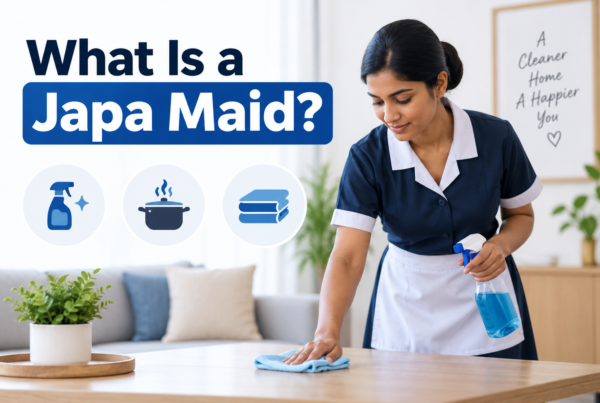
So let’s get straight to it. A full-time maid for baby care, in this context, usually means a Japa maid — someone trained specifically in newborn handling, postpartum recovery support, and the daily rhythm of feeding, bathing, and settling a baby. Not a general house help who’s picked up a few tricks along the way, but someone who’s done this dozens of times before and knows what “normal” looks like for a two-week-old versus what’s worth flagging to a doctor.
We’ve been placing these caregivers with families across South Delhi, Noida, Gurgaon, and Faridabad for over 25 years now. More than 50,000 families, and a bench of 200+ in-house trained caregivers we know personally — not agency names pulled from a spreadsheet. That history is really the reason we’re writing this guide: we’ve heard almost every question a new parent can ask, usually at 2 a.m., usually in a slightly panicked tone.
What Does a Full-Time Baby Care Maid Actually Do?
In short — everything around the baby’s daily routine, and quite a bit around the mother’s recovery too. Feeding support, oil massage, bathing, diaper changes, sleep tracking. But the job description undersells what actually makes it useful.
Here’s the thing about newborns: they can’t tell you what’s wrong. A rash could mean nothing, or it could mean the detergent needs changing. A change in how a baby feeds could be teething months away or a sign of reflux right now. An experienced Japa maid has usually seen enough babies to know the difference, or at least know when it’s worth a call to the pediatrician instead of waiting it out.
Day to day, the role typically covers:
- Traditional oil massage and baby bath — this is really the heart of Japa care
- Helping with breastfeeding positions and burping
- Diaper changes and basic skin care to head off rashes before they get bad
- Keeping loose track of feeding and sleep patterns, especially in the first weeks
- Light support for the mother’s own postpartum recovery
None of this replaces a doctor. What it does is buy new parents something they’re usually short on right after delivery — sleep, and one less thing to worry about getting wrong.
Japa Maid vs. Regular Maid: What’s Actually Different?
A Japa maid is trained specifically for the postpartum window — usually the first 40 to 90 days after birth — while a regular domestic maid handles general household work without any newborn-specific training. That difference matters more than most families realize until they’ve experienced both.
| Factor | Japa Maid | Regular Domestic Maid |
|---|---|---|
| Training | Newborn massage, bathing, postpartum care | General cleaning and cooking |
| Focus | Mother and baby during recovery | Household upkeep |
| Duration | Typically 40–90 days | Ongoing |
| Skill level | Specialised, often certified | Varies, usually informal |
We get asked fairly often why families can’t just extend the family cook’s hours to cover baby duty for a month or two. The honest answer is that newborn massage technique, in particular, isn’t something you improvise — done wrong, it can strain a baby’s joints or cause discomfort that shows up as unexplained crying. It’s a small but real risk, and it’s the reason “Japa maid services” is its own search term and not just “maid services.”
Why Are So Many Delhi NCR Families Hiring Japa Nannies Now?
Mostly because the old safety net — a grandmother, an aunt, a neighbour who’d done this before — isn’t always around anymore. Nuclear households are the norm now, not the exception, and that changes who’s available in the first two weeks after delivery.
A few things we’ve watched play out repeatedly:
- C-section deliveries are more common, and recovery from one takes real time — time a mother can’t spend also learning newborn care from scratch.
- Both parents often work, which means overlapping support matters before anyone goes back to a job.
- Smaller family units mean less built-in help just living down the street.
- Parents today are simply more aware that a badly done massage or a missed feeding cue isn’t a small thing — so they’d rather hire it out properly.
A Japa nanny, in a lot of ways, is filling the role a grandmother used to fill. The difference is she’s trained for it specifically, rather than relying on memory from thirty years ago.
How Do You Actually Find a Reliable One Near You?
Go through a verified agency rather than a WhatsApp forward or a neighbour’s “someone I know.” It sounds obvious, but a surprising number of families still hire informally and find out too late that there’s no recourse if something goes wrong.
Before you commit, it’s worth checking for:
- Verified ID and address proof for the caregiver
- Actual training in newborn handling, not just experience claimed verbally
- Some kind of trial period, or a replacement policy if it’s not a fit
- Clarity upfront on live-in versus day-shift terms
- A track record you can actually verify — ask for it
At Reeta, every caregiver we place has gone through our own training and vetting — we don’t outsource to loosely managed sub-agencies, which is a fairly common shortcut in this industry. It’s also why a lot of our bookings come from repeat families, second or third babies, or referrals from a friend who used us the first time.
Japa Maid Noida: Anything Different Here?
Not fundamentally, but timing matters more. Noida has a lot of young, working families in high-rise societies, and the requests we get here tend to come in fast — often within a day or two of delivery, sometimes while the family is still at the hospital.
For Japa in Noida specifically, families usually care about:
- How quickly a caregiver can actually start
- Whether she’s comfortable with society entry and visitor timing rules, which some towers are strict about
- Live-in versus 12-hour shift flexibility
- Whether support can stretch a little past the newborn phase if needed
We keep a dedicated pool for Noida sectors for exactly this reason — placement within 24 to 48 hours is realistic, and for a lot of parents, that turnaround is the single biggest source of stress we can take off their plate.
How Long Should You Actually Hire a Japa Maid For?
Most families go with 40 to 90 days, which lines up with the traditional postpartum recovery window. The first 40 days tend to be the most intense, both for the baby settling in and for the mother physically healing.
A rough shape it usually takes:
- Days 1–15: Heavy support — feeding help, massage, close attention to the mother’s own recovery
- Days 16–40: Things settle into a routine, support continues but eases slightly
- Days 41–90 (if needed): Extended, mostly for families who want the extra hand until the mother feels ready to manage solo
We don’t push fixed packages here. Every recovery looks a little different, and the hiring period should really follow that, not the other way around.
Conclusion
Hiring the right full-time maid for baby care isn’t just a logistics checkbox before delivery — it genuinely shapes how those first few weeks go, for both the baby and the mother. Get it right, and it’s one less thing to worry about during a period that already has enough unknowns.
If you’re expecting, or you’ve just welcomed a baby and need someone trained and trustworthy at home, Reeta Nursing And Old-Age Care Services can arrange a verified Japa maid across Delhi, Noida, Gurgaon, or Faridabad — often within 24-48 hours. Get in touch and we’ll match you with a caregiver who’s actually right for your household, not just the next name on a list.
FAQs
1. What’s the actual difference between a Japa maid and a baby nanny?
A Japa maid is focused on the newborn and the postpartum mother specifically during the first weeks — massage, bathing, recovery support. A baby nanny is more of a longer-term role that continues well past the newborn stage.
2. How much does a full-time maid for baby care cost in Delhi NCR?
It depends on live-in versus day-shift, how long you need her, and experience level. Honestly, the best move is just asking a verified agency for a quote against your specific situation rather than going by a general figure.
3. Can I hire a Japa maid on short notice, right after delivery?
Usually, yes — if the agency keeps a ready bench. At Reeta we can often place someone within 24-48 hours, which matters because babies don’t exactly arrive on schedule.
4. Live-in or day-shift — which is actually better?
Live-in covers you for night feeds and early recovery when things are unpredictable. Day-shift works fine if you’ve got someone else around at night. It really comes down to what your household looks like.
5. Are Japa maids in Noida trained the same way as in Delhi?
At Reeta, yes — same training and verification process across Delhi, Noida, Gurgaon, and Faridabad. Location shouldn’t mean a difference in quality, and we’ve built the team to make sure it doesn’t.