
If someone you love falls down or is undergoing surgery, the desire recuperate at the comfort of their home is understandable. But, providing the right medical treatment and ongoing help can become difficult for family members. This is why expert patient care services are essential to bridge the distance between discharge from hospital and full healing.
Care for patients include a variety of non-medical and medical support created to assist individuals in managing their ailments while remaining within the safety at home. From post-surgical treatment to managing chronic diseases These services make sure that patients get the care they require, without the need for hospitalization.
Understanding Patient Care Services: A Comprehensive Overview
If we’re talking about patients’ care services are referring to expert healthcare services that are delivered directly to patients at their own homes. Contrary to conventional hospital care the services provide experts in medicine to the familiar environment which aids in faster healing as well as more emotional wellness.
The range of patient care services generally comprises:
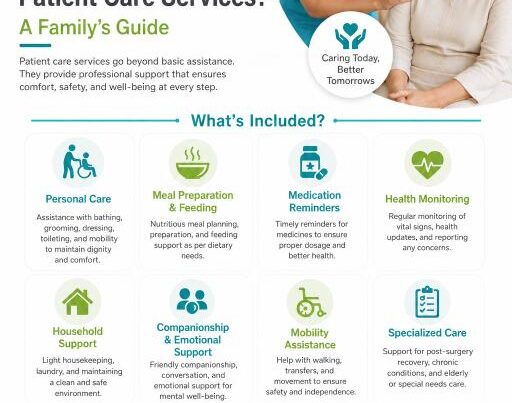
Expert nursing care Wound dressing administering medication, care for catheters and monitoring of vital signs.
Personal Care Assistance Aid in grooming, bathing, dressing and mobility assistance.
Management of medical equipment Operational oxygen therapy equipment, ventilators as well as other equipments.
Post-operative treatment Helping to recover following joint replacements, cardiac procedures or other surgical operations.
Chronic disease treatment Assistance for patients suffering from Parkinson’s disease, diabetes rehabilitation from stroke, as well as respiratory ailments.
What is it that makes patient care services special is their ability to be able to adapt to evolving needs. When patients heal or their conditions alter, the degree of care may be adjusted to ensure continuous care with no unnecessary interruption.
The Importance of Home-Based Healthcare
Why do more families opt for homes-based patient care services instead of institutional services? Evidence is convincing. Studies consistently show that patients heal faster and suffer fewer problems while being treated at home. Based on studies that have been published in respected medical journals that have been conducted, home-based healthcare lowers hospital readmission rates by as much as 25%, and also increases satisfaction ratings for patients.
Benefits go beyond the physical. The convenience of being at home allows patients to keep their schedules in order, sleep in their own bed, and remain connected to families and the community. It reduces anxiety and stress that have been proven to hinder the healing process. Professional patient care services can help through providing expert medical advice while retaining the patient in the support system.
In addition, the home-based approach is cheaper for families. In one study, home health care costs about 50 percentage less than a typical five-day hospital stay. This makes quality medical care more affordable.
Who Benefits From Patient Care Services?
Services for patient care are created for various individuals and circumstances. Here’s a look at who stands most benefitting through these solutions:
Seniors with chronic ailments managing multiple medication and monitoring health parameters as well as maintaining daily routines needs professional help.
Patients who have undergone post-operative procedures patients who are recovering from surgeries such as heart bypass, hip replacement or cancer surgery require attentive monitoring and help in vulnerable times.
People with disabilities Mobility disabilities or physical impairments can require assistance daily with things of daily living.
Patients suffering from terminal illness Hospice and palliative support services ensure peace and comfort during the end-of-life phases.
Family members that require relief Primary caregivers may require temporary help to prevent fatigue and to maintain their well-being.
In any circumstance, patient care services can be customized in order to satisfy specific medical needs as well as personal preferences and schedule requirements.
Common Challenges Families Face
It can be difficult to navigate healthcare. A lot of families face challenges in trying to access patient care services . Knowing these obstacles can help to make more informed decisions.
The first challenge is to find skilled experts
Family members worry about caregivers’ education, experience, as well as reliability. Professionals who provide the best care conduct strict background checks, validate the legitimacy of their employees, and offer that their employees are educated on a regular basis.
Second Challenge: Providing the safety of your home
There are many homes that are not prepared to provide medical treatment. Experts evaluate the surroundings and suggest changes to avoid injuries and falls.
Challenge 3: Managing communication
The coordination of multiple health providers relatives, health care providers, as well as caregivers, can get confusing. Professional companies assign care coordinators in order to simplify the process of communicating.
Challenge 4 The challenge is to balance costs
Home care, while it is usually cheaper than hospital care however, planning for financials is crucial. A lot of families are interested in the possibility of insurance and other payment options.
How Patient Care Services Work: A Step-by-Step Guide
Knowing the steps to access patient care services can help you navigate the path with confidence
Step 1: Comprehensive Assessment
An experienced healthcare professional assesses the medical history of the patient medical condition, present health, regimen, as well as daily demands. The assessment will identify specific requirements as well as potential risk factors.
Step 2: Care Plan Development
Based on the evaluation an individual treatment plan is designed. The document details all the procedures, medications as well as mobility and dietary restrictions and emergency protocols.
Step 3: Caregiver Assignment
A qualified professional with the appropriate expertise and knowledge is assigned for the individual. The doctor ensures compatibility and an open communication with family members.
Step 4: Service Implementation
The treatment begins according to the prescribed plan. Monitoring regularly ensures that quality standards are being maintained and modifications are made as the condition of the patient alters.
Step 5: Ongoing Evaluation
The care plan is periodically revision to make sure it is always relevant. Families get regular updates on their loved one’s health.
Practical Tips for Choosing Patient Care Services
As I have helped many families with this issue I offer these guidelines for deciding on the right patient care services :
Determine your needs in a clear manner Decide if you need skilled nursing private care or therapy.
Check credentials and licenses Request information about personnel qualification, programs for training as well as compliance with the law.
Discuss emergency procedures Check for clearly defined procedures to handle emergency situations and medical emergencies.
You can request a trial time starting with short-term care lets the user to test compatibility prior to making a long-term commitment.
Communication openly Communicate openly: Share any pertinent details about your medical history, preferences as well as concerns with your care doctor.
Include the patient When you are able Include your loved one when making decisions concerning their health to ensure dignity and autonomy.
Conclusion
Professional patient care services are a kind and effective method of healthcare that respects the patients’ need to feel at home and in peace. In bringing the expertise of medical professionals to the comfort of your home These services speed recuperation, decrease complications as well as provide families with a sense of assurance. In the event of helping post-surgical healing or managing chronic ailments high-quality patient care services will ensure that your loved ones get the attention they merit.